

The Shift From search Machines to AI exchanges
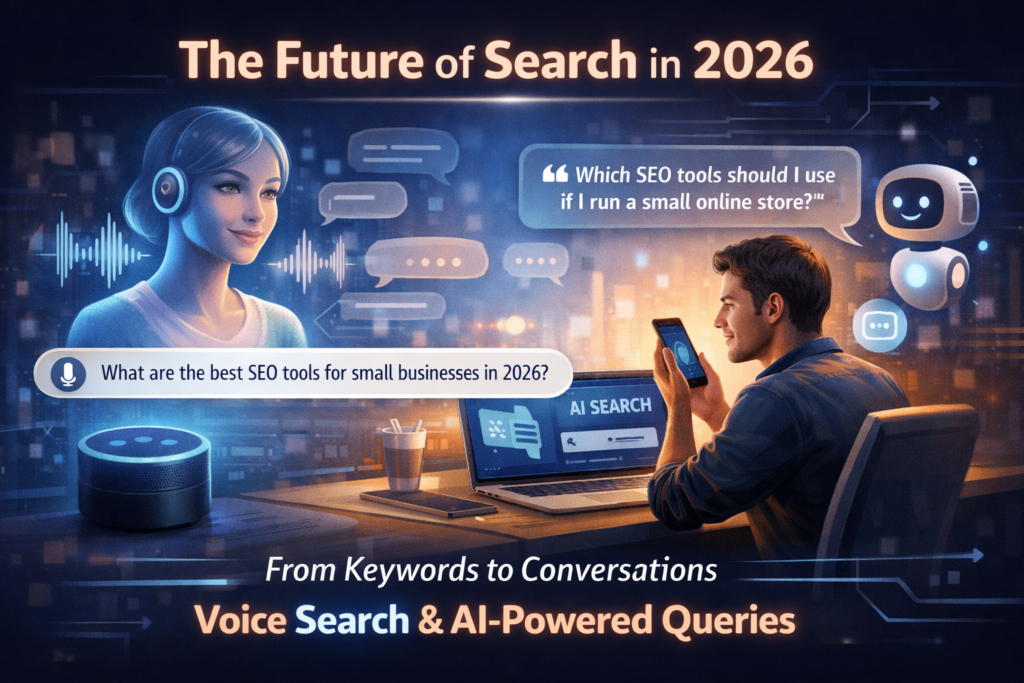
Search is no longer just about codifying keywords into a search bar. In 2026,Voice search Optimization and AI search technologies are transforming how users will increasingly interact with technology through voice assistants, AI chat interfaces, and conversational search engines. Rather of searching “ best SEO tools 2026, ” users now ask
“ What are the stylish SEO tools for small businesses in 2026? ” Or indeed more conversationally “ Which SEO tools should I use if I run a small online store? ”
This shift represents the transition from clicks to conversations driven by voice search and conversational Query technologies. Content generators must now design content not only for search machines but also for AI Query systems and voice search assistants that interpret and respond to natural language questions.
According to recent industry studies
- Over 55 of global quests are now voice or conversational queries.
- Smart assistants process billions of voice requests daily.
- AI- driven search tests increasingly deliver direct answers rather than traditional search results.
For SEO professionals, marketers, and publishers, this means one thing
Traditional SEO alone is no longer enough.
Content must now be optimized for
- Voice search SEO
- Conversational Query experiences
- AI answer machines
- Natural language queries
This companion explores how to design content for voice and conversational search in 2026, icing your content stays visible in the evolving search ecosystem.
Understanding Conversational search in Modern AI Search
What Is Conversational Search?
Conversational Query refers to natural language queries used in voice search and AI search platforms.
Rather than short keywords, users ask complete questions ormulti-step queries.
Example Comparison
Traditional search Conversational search
stylish CRM software What’s the stylish CRM software for startups?
SEO tips How can I ameliorate my SEO for a new blog?
rainfall London Will it rain in London hereafter autumn?
Conversational queries generally include
- Question words( who, what, where, when, why, how)
- Context
- Intent
This means content must now be structured to answer questions directly and naturally.
The Technologies Driving Conversational Query
Several inventions have accelerated this shift.
1. AI assistants
Devices and apps powered by AI assistants are now central to search geste
Examples include:
- Smart speakers
- Mobile voice assistants
- AI chat interfaces
- Voice- enabled cybersurfers
These systems calculate structured content and clear answers.
2. Large Language Models( LLMs)
Modern search platforms increasingly calculate LLMs to interpret users’ intent and induce responses.
This changes the SEO geography because:
- AI may epitomize your content
- AI may quote specific sections
- AI may prize answers directly
Content must thus be structured and authoritative.
3. Voice Interfaces
Voice technology is now bedded in
- Smartphones
- Cars
- TVs
- Wearables
- Smart homes
Voice queries are generally :
- Longer
- Further conversational
- Question- driven
Why Voice Search SEO Matters in 2026
Rapid Growth of Voice Search
Voice search optimization is becoming critical as voice search adoption continues to accelerate worldwide.
Industry estimates indicate :
- 8 billion voice assistants are in active use encyclopedically.
- Nearly 70 of users prefer voice for quick questions.
- Mobile voice search dominates original queries.
This shift changes how content is discovered
Voice Search Has Different Ranking Signals
Voice assistants prioritize content that :
- Provides clear, terse answers
- Uses natural language
- Has high authority
- Loads snappily on mobile devices
Frequently, voice assistants pull responses from
- Featured snippets
- Structured data
- Authoritative websites
This means optimizing for voice search SEO strategies can dramatically increase visibility.
The elaboration of SEO From Keywords to Intent
Traditional SEO concentrated on
- Keywords
- Backlinks
- Specialized optimization
While still important, modern SEO prioritizes intent and environment.
Three situations of search Intent
1. Informational Intent
Users want to learn about commodities.
Example:
“ How does voice query work ”
2.Navigational Intent
Users want to reach a specific site.
Example:
“ Open Amazon. ”
3. Transactional Intent
users want to take action.
Example:
“ Order a large pepperoni pizza. ”
Conversational search frequently combines multiple intents in a single query, making happy structure pivotal.
Key Principles for Designing Conversational Content
1. Write the Way People Speak
Voice search queries act in spoken language.
Rather of writing:
“ Voice search SEO strategies. ”
Write
“ How can you optimize your website for voice search? ”
Best Practices
- Use natural phrasing
- Write question- grounded headlines
- Avoid exorbitantly specialized wording

2. Use Question- Grounded Content
Questions dominate conversational query.
Examples:
- What’s voice SEO?
- How does conversational query work?
- Why is voice search important?
Tip
Use tools like:
- People Also Ask
- AnswerThePublic
- Search Console queries
These reveal real conversational questions.
3. Optimize for Featured snippets
Voice assistants frequently read featured snippets audibly.
How to Win Featured snippets
Give answers in :
- 40 – 60 word summaries
- Clear delineations
- bullet points
- Step- by- step attendants
Example
What’s voice Query optimization?
It is the process of perfecting website content so it appears in voice adjunct responses. It focuses on natural language, question- grounded queries, and terse answers.
4. Use Structured Data
Structured data helps AI systems understand your content more.
Important schema types include:
- FAQ Schema
- How- To Schema
- Product Schema
- Local Business Schema
Benefits:
- Improves search visibility
- Helps AI excerpt answers
- Enhances rich results
Creating Content That AI Can Understand
The significance of Semantic SEO
Modern AI search engines use semantic understanding, meaning they dissect content connections rather than insulated keywords.
Example content cluster
Main content : Voice Search SEO
Related keywords
- conversational search optimization
- AI search assistants
- natural language queries
- featured snippets
- question- grounded SEO
Creating content clusters strengthens authority.
Build Comprehensive Topic Coverage
Instead of writing insulated papers, produce content ecosystems.
Example structure
Pillar Page
Voice Search SEO companion
Supporting Content
- How voice assistants work
- Stylish tools for voice search optimization
- Conversational content strategies
- Voice search statistics
This signals topical authority to AI search engines and conversational search systems.
Optimizing Content for Voice devices
Voice search users anticipate instant answers.
Crucial Optimization ways
1. Prioritize Mobile Performance
Voice search queries and natural language queries occur primarily on mobile devices.
Ensure :
- Fast runner speed
- Responsive design
- Featherlight pages
2. Target Long- Tail Keywords
Voice queries are generally longer.
Examples:
Short keyword
SEO tools
Voice query :
“ What are the stylish SEO tools for newcomers? ”
Long- tail keywords frequently have:
- Lower competition
- Advanced intent
- More conversion rates
3. Focus on Original SEO
Voice searches constantly include original intent.
Examples:
“ Stylish coffee shop near me ”
“ Dentist open now in Chicago ”
Original optimization requires:
- Streamlined business listings
- Original schema markup
- Google Business Profile optimization
Designing Conversational users Experiences
SEO is no longer just about rankings, it’s about users’ commerce.
Content Should Mimic Dialogue
Effective conversational content includes:
- Questions
- Follow- up explanations
- Step- by- step responses
Example format :
Question
How do I optimize content for voice search?
Answer
To optimize content for voice search, concentrate on natural language, question- grounded queries, and terse answers. Structured data and mobile performance also ameliorate visibility.
UseMicro-Answers Throughout Content
AI models frequently prize specific sections, not entire papers.
Thus include:
- Short delineations
- Quick tips
- Clear bullet points
How AI Answer Machines Choose Content
AI- driven search machines prioritize
Authority
Signals include:
- Backlinks
- Expert authors
- Citations
- Character
Accuracy
Content must include:
- Data
- Verified sources
- Streamlined information
Clarity
AI systems prefer:
- Direct answers
- Structured formatting
- Clear headlines
The Role of E.E.A.T in Conversational SEO
Google emphasizes E.E.A.T
- Experience
- Expertise
- Authoritativeness
- Trustworthiness
For conversational search, this matters indeed more because AI systems quote authoritative sources.
Ways to ameliorate E.E.A.T:
- Include expert quotes
- Cite exploration studies
- Add author memoirs
- Give accurate data
Future Trends in Conversational Search
1. AI Agents Performing Tasks
Search will evolve beyond answers.
Users may say:
“ Book me a flight under$ 500 coming weekend. ”
AI agents will complete the task.
Content must support decision- making queries.
2. Multimodal Search
Users will combine:
- Voice
- Images
- Text
Example:
Uploading a print and asking-
“ What factory is this and how do I watch for it? ”
3. Hyperactive-individualized search Results
AI systems will conform answers grounded on:
- Users history
- Preferences
- Position
This makes environment-rich content more precious.
Practicable roster for Voice SEO in 2026
Use this quick roster to optimize your content.
Content Structure
✔ Use question- grounded headlines
✔ give terse answers
✔ Use bullet lists and summaries
Specialized SEO
✔ apply schema markup
✔ Ameliorate runner speed
✔ insure mobile optimization
Keyword Strategy
✔ Target long- tail keywords
✔ Focus on natural language queries
✔ figure content clusters
Authority Signals
✔ Cite believable sources
✔ Publish expert perceptivity
✔ Maintain streamlined content
Conclusion Designing Content for the AI discussion period
The future of search is n’t just about rankings, it’s about being the answer.
As AI assistants, voice interfaces, and conversational search machines come the primary gateway to information, businesses must reevaluate their content strategy.
To succeed in 2026 and further, concentrate on:
- Natural language optimization
- Question- grounded content
- Semantic SEO
- Structured data
- Authority and trust
Eventually, the thing is simple
Design content that answers real mortal questions in clear, conversational language.
Brands that acclimatize to this “ clicks to exchanges ” shift will gain a major advantage in the AI- powered search ecosystem.
For More Such Blogs Click Here
FREQUENTLY ASKED QUESTIONS (FAQ’S)
What’s conversational SEO?
Conversational SEO is the practice of voice search and conversational search optimization for natural language queries. used in voice assistants, AI chat interfaces, and conversational search machines
How is voice search different from traditional search?
Voice search queries are generally longer, further conversational, and question- grounded, whereas traditional search relies on short keyword expressions.
Why are featured snippets important for voice search?
Voice assistants frequently read featured snippets audibly as answers, making them a crucial source of voice search results.
How long should state search answers be?
The ideal answer length is 40 – 60 words, furnishing a terse and clear response.